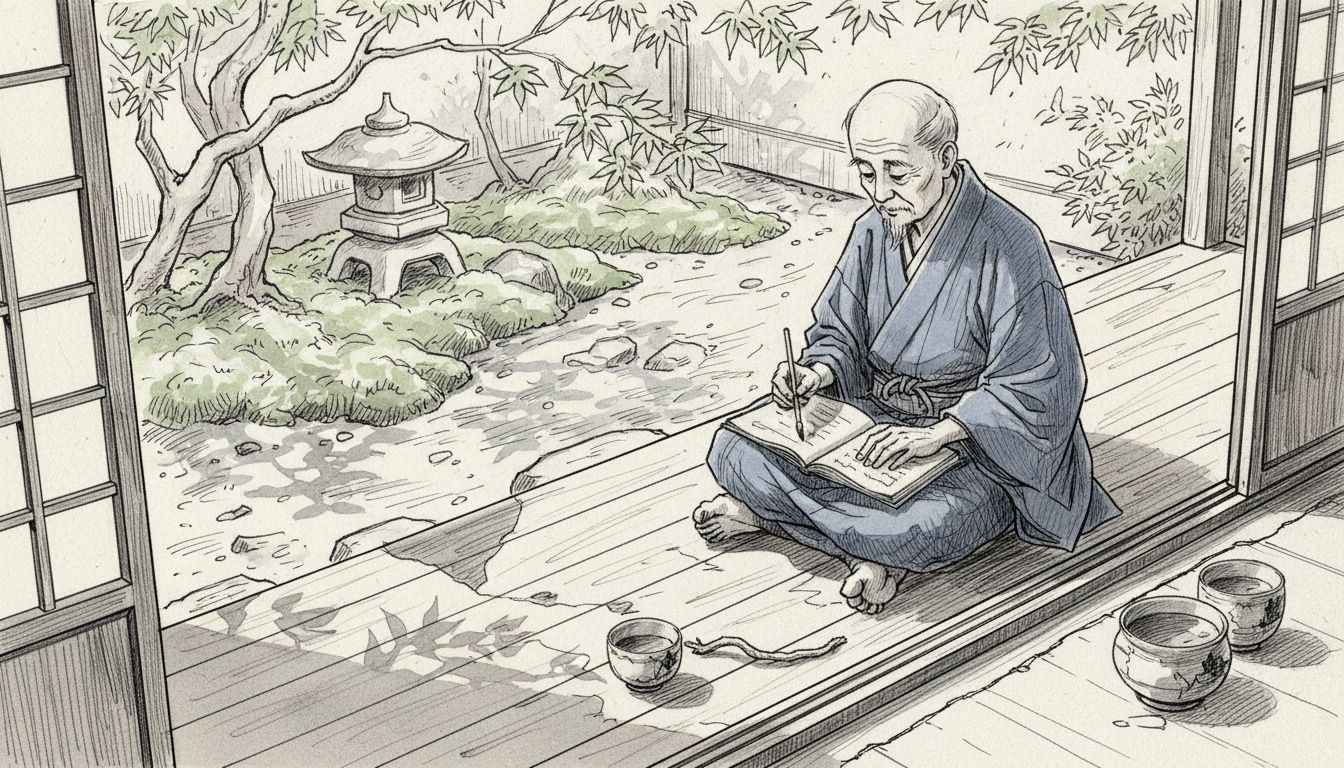
Searching for purpose at work sometimes feels like chasing a moving target, especially when traditional career advice leaves you uninspired. Japanese philosophy offers a fresh path, blending indigenous Shinto beliefs with rich Buddhist and Confucian influences to foster a more holistic understanding of life and professional growth. By exploring concepts like interdependence and embracing continuous transformation, you can uncover deeper clarity and meaning in both your career and daily experiences.
Table of Contents
- Defining Japanese Philosophy And Common Myths
- Major Schools: Shinto, Buddhism, Confucianism, Zen
- Core Principles: Interconnectedness And Impermanence
- Unique Life Concepts: Ikigai, Wabi-Sabi, Kaizen
- Influence On Career And Personal Fulfillment
- Misapplications To Avoid In Modern Contexts
Key Takeaways
| Point | Details |
|---|---|
| Holistic Understanding | Japanese philosophy emphasizes interdependence and synthesis, offering a unique perspective on reality that contrasts with Western analytical approaches. |
| Core Concepts | Principles like interconnectedness and impermanence encourage a dynamic view of existence, fostering a deeper appreciation for change and relationships. |
| Complementary Schools | Major philosophical schools such as Shinto, Buddhism, Confucianism, and Zen offer distinct but complementary insights into human experience and ethics. |
| Cultural Sensitivity | Avoid misapplying Japanese philosophical concepts by understanding their cultural context; genuine engagement requires respect and intellectual humility. |
Defining Japanese Philosophy and Common Myths
Japanese philosophy represents a profound and nuanced intellectual tradition that transcends simplistic Western categorizations. Far more than a derivative intellectual system, Japanese philosophical thought emerges from a unique cultural landscape that integrates indigenous Shinto beliefs with imported philosophies like Buddhism and Confucianism.
At its core, Japanese philosophy distinguishes itself through a holistic approach to understanding reality. Unlike Western philosophical traditions that often emphasize analytical dissection, Japanese thought prioritizes interdependence and synthesis. This approach views human experiences not as isolated events, but as interconnected processes that flow and transform continuously.
Several common myths persistently misrepresent Japanese philosophical traditions:
- Japanese philosophy is merely a copy of Chinese intellectual systems
- Philosophical thinking in Japan lacks originality and depth
- Eastern philosophical approaches are fundamentally irrational compared to Western models
These misconceptions overlook the rich, dialogical nature of Japanese intellectual contributions. Japanese philosophers have consistently challenged Eurocentric views, presenting nuanced perspectives that recognize multiple ways of understanding human experience and consciousness.
The intellectual landscape of Japanese philosophy spans ancient to contemporary periods, featuring a dynamic interplay between native Shinto worldviews and imported philosophical frameworks. This tradition does not seek to replace existing knowledge but to create a more comprehensive understanding of human existence through respectful dialogue and synthesis.
Pro tip: Approach Japanese philosophy with intellectual humility, recognizing that diverse philosophical traditions offer valuable insights beyond your current cultural perspective.
Major Schools: Shinto, Buddhism, Confucianism, Zen
Japanese philosophical and religious traditions form a complex, interconnected tapestry of thought that has evolved over centuries. Japanese Buddhism developed distinct philosophical schools originating from Mahayana traditions introduced in the 6th century, each offering unique perspectives on spiritual practice and human understanding.
The major schools represent different approaches to exploring human experience and philosophical insight:
- Shinto: The indigenous spiritual tradition focusing on nature worship and ritual purity
- Buddhism: Emphasizing personal transformation and understanding of consciousness
- Confucianism: Prioritizing social harmony and ethical conduct
- Zen: Concentrating on direct experience and meditative awareness
Each tradition contributes unique philosophical insights. Shinto sects reflect a syncretic tradition balancing indigenous kami worship with imported religious ideas, demonstrating the adaptive and integrative nature of Japanese philosophical thought. These schools are not competing systems but complementary approaches to understanding human existence.
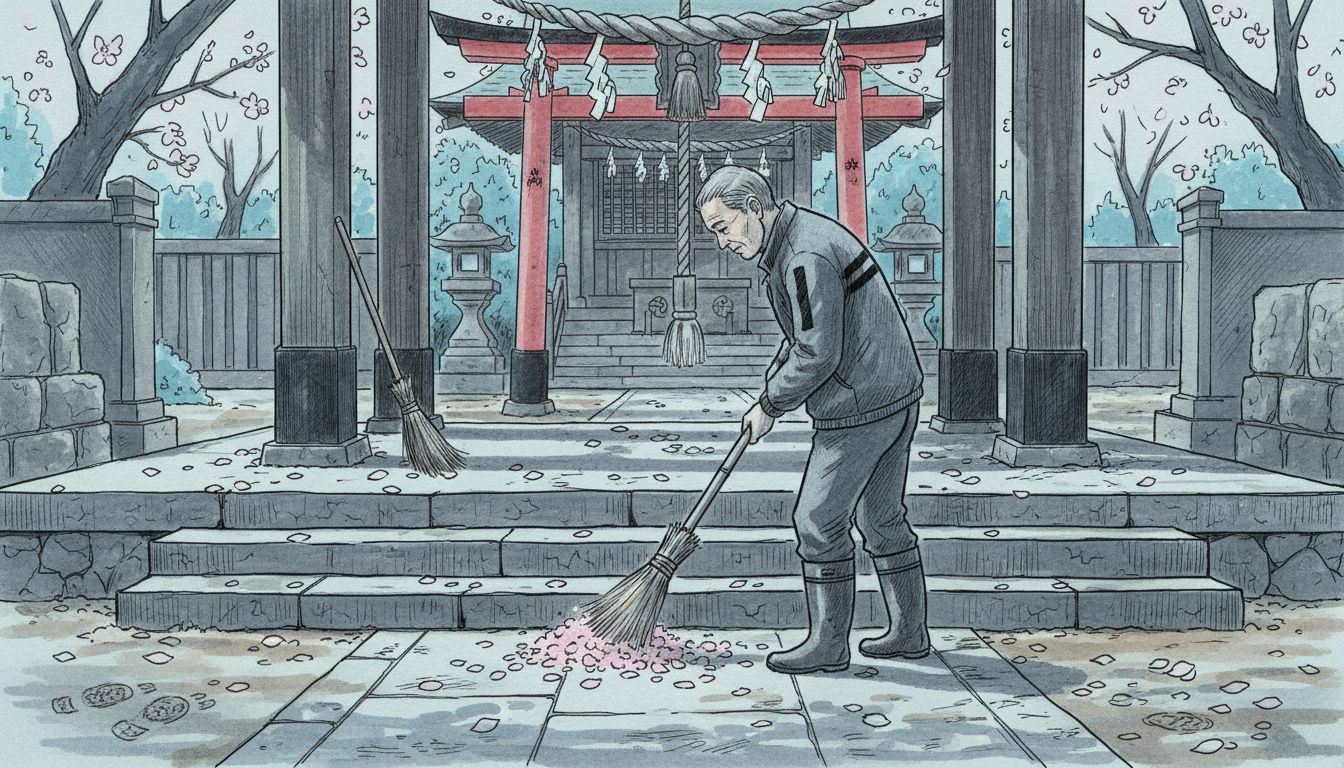
Buddhism in Japan particularly stands out with its diverse schools. Zen Buddhism, for instance, emphasizes direct meditation and personal insight, while Pure Land Buddhism focuses on compassionate practice and spiritual devotion. Nichiren Buddhism offers another distinctive approach, centered on chanting and personal transformation.
Confucianism’s influence extends beyond religious practice into social and governmental structures, providing ethical frameworks that prioritize social harmony, personal virtue, and interpersonal responsibility. This philosophical approach profoundly shaped Japanese social interactions and institutional development.
Here is a comparison of major Japanese philosophical schools and their unique influences:
| School | Distinct Focus | Key Contribution | Enduring Legacy |
|---|---|---|---|
| Shinto | Nature and ritual purity | Connection to natural world | Inspires modern ecology |
| Buddhism | Consciousness transformation | Meditation, compassion | Zen global influence |
| Confucianism | Social ethics and harmony | Moral order, governance | Shapes education, civics |
| Zen | Direct meditative experience | Mindfulness, non-duality | Fuels mindfulness trend |
Pro tip: Explore these philosophical traditions as complementary perspectives rather than competing belief systems, recognizing the unique insights each offers to understanding human experience.
Core Principles: Interconnectedness and Impermanence
Central principles of Japanese philosophical thought reveal a profound understanding of reality that challenges Western philosophical assumptions. The concepts of interconnectedness and impermanence (mujō) form the foundational framework for understanding human experience and the natural world.
Key characteristics of these core principles include:
- Viewing reality as a dynamic, flowing process
- Rejecting the notion of fixed, independent substances
- Embracing continuous transformation
- Recognizing the fundamental relationship between all phenomena
- Understanding change as a natural and beautiful aspect of existence
Impermanence in Japanese philosophy is not a source of existential anxiety, but a pathway to deeper understanding. Philosophical approaches to impermanence encourage a profound appreciation for the present moment, transforming what might be perceived as loss into an opportunity for beauty and meaningful engagement.
The principle of interconnectedness suggests that no entity exists in isolation. Every element of existence is fundamentally related, creating a web of mutual dependence that challenges individualistic Western philosophical models. This perspective encourages a holistic worldview where personal actions are understood as part of a larger, intricate system of relationships.
Zen Buddhist and Shinto traditions particularly emphasize these principles, demonstrating how philosophical insights can be deeply integrated into daily life and spiritual practice. By recognizing the transient nature of experience, individuals can cultivate a more adaptive, compassionate approach to living.
Pro tip: Practice mindful observation of change in your daily life, recognizing that impermanence is not a weakness but a fundamental source of beauty and potential.
Unique Life Concepts: Ikigai, Wabi-Sabi, Kaizen
Japanese philosophical concepts offer profound insights into living a meaningful, purposeful life. Ikigai, Wabi-Sabi, and Kaizen represent three interconnected principles that provide a holistic approach to personal development and understanding one’s place in the world.
These unique life concepts can be understood through their core characteristics:
- Ikigai: The reason for being, integrating passion, mission, profession, and vocation
- Wabi-Sabi: Celebrating beauty in imperfection and transience
- Kaizen: Embracing continuous, incremental personal improvement
Ikigai represents a deeply personal journey of discovering one’s purpose by aligning individual passions with meaningful work. It’s not just a career strategy, but a holistic approach to understanding personal potential and societal contribution. Japanese life philosophy emphasizes that true fulfillment comes from finding the intersection between what you love, what you’re good at, what the world needs, and what you can be paid for.
Wabi-Sabi offers a transformative perspective on imperfection, teaching individuals to find beauty in incompleteness and transient nature. This concept encourages acceptance of life’s natural cycles and the inherent beauty of things that are modest, humble, and imperfect. It challenges Western ideals of perfection, instead promoting a more nuanced, compassionate view of existence.
Kaizen, often translated as continuous improvement, provides a practical framework for personal and professional growth. It suggests that significant transformation happens through small, consistent steps rather than dramatic, overnight changes. This approach applies to everything from personal habits to professional skills, emphasizing patience and persistent effort.
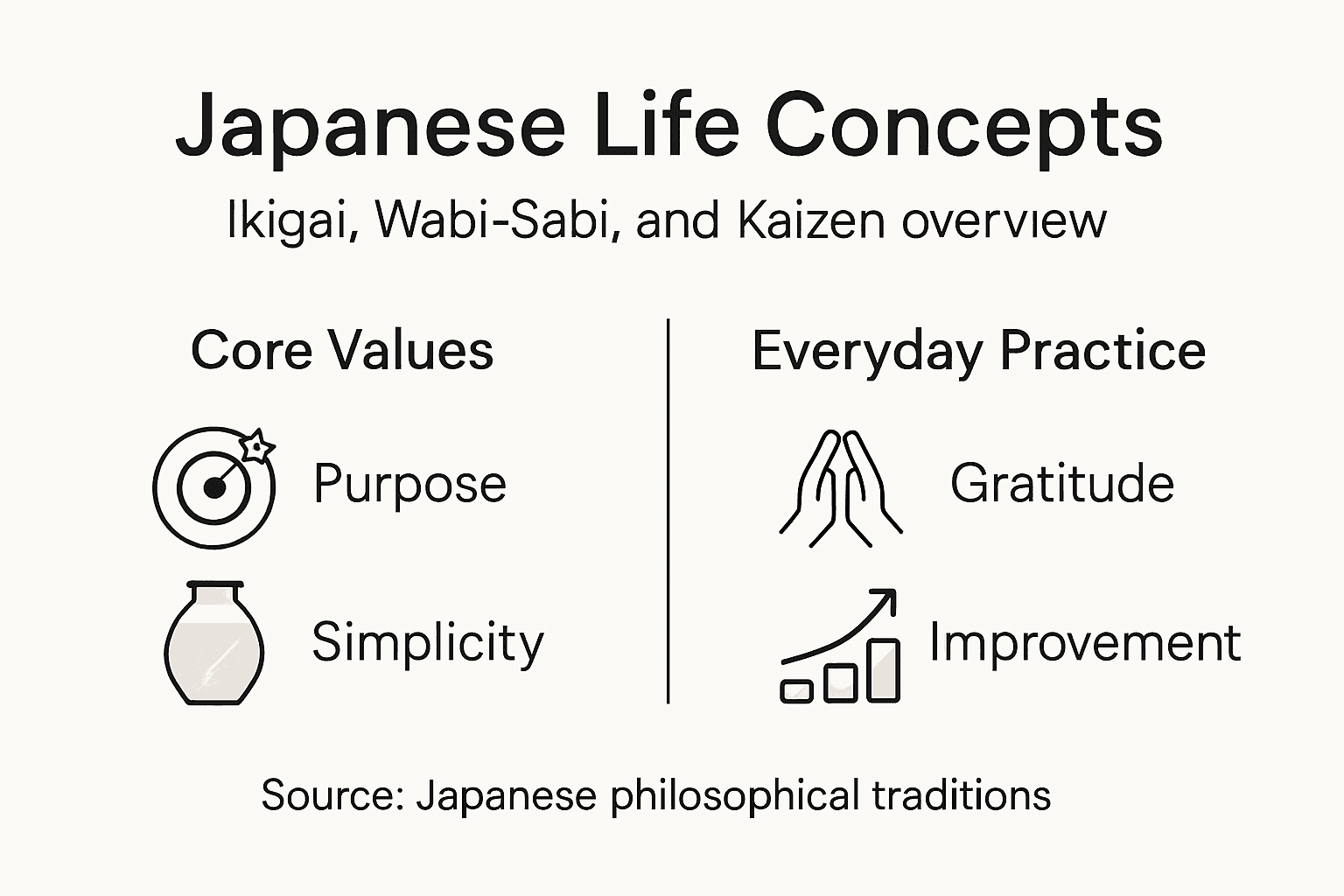
This summary captures how core Japanese life concepts foster personal growth:
| Concept | Life Guidance | Modern Application | Cultural Value |
|---|---|---|---|
| Ikigai | Aligns passion with purpose | Career/life satisfaction | Sense of daily fulfillment |
| Wabi-Sabi | Finds beauty in imperfection and change | Design, well-being trends | Acceptance of transience |
| Kaizen | Encourages constant incremental growth | Personal/professional habits | Emphasis on self-improvement |
Pro tip: Integrate these concepts gradually into your life, starting with small, intentional practices that align with Ikigai, embrace Wabi-Sabi’s acceptance, and embody Kaizen’s spirit of continuous improvement.
Influence on Career and Personal Fulfillment
Japanese workplace philosophy transcends traditional career perspectives, offering a transformative approach to professional development and personal satisfaction. The concept of Shigoto represents more than employment—it’s a holistic integration of personal passion, societal contribution, and professional integrity.
Key dimensions of this philosophical approach include:
- Aligning personal values with professional goals
- Understanding work as a form of personal and collective contribution
- Balancing professional commitment with personal well-being
- Developing craftsmanship and pride in one’s professional practice
- Creating meaningful connections between individual skills and societal needs
Ikigai as a career framework provides a powerful model for career guidance and personal fulfillment. By encouraging individuals to find harmony between their passions, skills, societal needs, and financial sustainability, this approach transforms career decision-making from a transactional process to a deeply meaningful journey.
The Japanese perspective challenges Western career models by emphasizing intrinsic motivation over external rewards. Professional success is measured not just by financial achievements, but by personal growth, contribution to community, and alignment with one’s deeper purpose. This holistic view recognizes that true career satisfaction emerges from understanding how individual talents can serve broader societal contexts.
Modern organizations are increasingly adopting these principles, recognizing that employee engagement stems from meaningful work that transcends traditional performance metrics. By integrating Japanese philosophical concepts, companies can create environments that nurture personal development, foster creativity, and support holistic professional growth.
Pro tip: Regularly reflect on how your current work aligns with your core values, skills, and societal contribution to cultivate a more purposeful professional journey.
Misapplications to Avoid in Modern Contexts
Nichiren Buddhism’s modern adaptations reveal critical pitfalls in misinterpreting philosophical traditions. When complex philosophical systems are removed from their original contexts, they risk being transformed into ideological tools that distort fundamental principles and cultural wisdom.
Common misapplications of Japanese philosophical concepts include:
- Reducing nuanced philosophies to simplistic, marketable self-help strategies
- Extracting techniques without understanding underlying cultural contexts
- Appropriating spiritual practices for personal branding or commercial gain
- Overgeneralizing philosophical principles across different cultural environments
- Ignoring the deep historical and spiritual foundations of these traditions
Nihonjinron discourse exemplifies dangerous philosophical misappropriation, demonstrating how philosophical ideas can be weaponized to promote cultural essentialism and exclusionary narratives. This approach often portrays Japanese philosophical traditions as inherently unique and superior, undermining the universal potential of these profound insights.
Misapplications frequently emerge from a lack of deep understanding and respect for the intricate philosophical landscapes from which these concepts originate. Western interpretations, in particular, tend to commodify philosophical approaches, stripping them of their nuanced cultural and spiritual contexts and reducing them to superficial lifestyle accessories.
Authentic engagement requires a commitment to understanding these philosophical traditions holistically—recognizing their complexity, historical depth, and transformative potential beyond surface-level adaptations. This demands intellectual humility, critical reflection, and a genuine willingness to learn beyond one’s cultural preconceptions.
Pro tip: Approach Japanese philosophical concepts with genuine curiosity and respect, prioritizing deep understanding over quick, superficial appropriation.
Discover Your Purpose Through the Wisdom of Japanese Philosophy
Are you seeking to embrace the profound principles of Ikigai, Wabi-Sabi, and Kaizen to live a truly meaningful life? This article highlights the challenge of finding personal fulfillment by aligning passion, values, and societal contribution while navigating the concepts of impermanence and interconnectedness. If you feel overwhelmed by superficial self-help advice or disconnected from your deeper purpose, understanding your unique Ikigai can provide clarity and direction.

Unlock the power of Japanese philosophy tailored for your life at Ikigain.org. Our comprehensive personality test offers personalized insights to help you integrate core Japanese philosophical principles with modern self-discovery. Start your journey today to find a purposeful career, enhance your well-being, and cultivate continuous growth inspired by time-honored traditions. Explore how these insights can transform your life by visiting Ikigain.org now and take the first step toward lasting satisfaction.
Frequently Asked Questions
What is the significance of Ikigai in Japanese philosophy?
Ikigai represents the reason for being, encompassing the intersection of one’s passions, skills, societal needs, and financial viability. It emphasizes finding purpose and fulfillment in life.
How do the principles of Wabi-Sabi influence personal well-being?
Wabi-Sabi teaches individuals to appreciate beauty in imperfection and transience. This perspective encourages acceptance of life’s natural cycles and fosters a compassionate view of existence.
What impact does the concept of Kaizen have on personal development?
Kaizen, focusing on continuous improvement, emphasizes that significant transformation occurs through small, consistent steps. It encourages individuals to adopt incremental changes for lasting personal and professional growth.
Why is interconnectedness an important principle in Japanese philosophy?
Interconnectedness highlights that all entities exist in relation to one another, promoting a holistic worldview. This principle challenges individualistic perspectives and fosters an understanding of mutual dependence within the fabric of existence.