
Many young professionals find themselves searching for deeper meaning beyond job titles or promotions. The concept of Ikigai offers a unique lens, connecting individual fulfillment with community, presence, and a sense of belonging, all rooted deeply in Japanese culture. This philosophy shifts the focus from mere achievement to wholehearted engagement in daily life. Discovering Ikigai can spark clarity for anyone ready to redefine purpose, balance passions, and shape a more mindful direction forward.
Table of Contents
- Defining Ikigai and Its Cultural Roots
- Exploring the Four Pillars of Ikigai
- Practical Applications in Daily Life
- Balancing Passion, Skill, and Purpose
- Common Mistakes and How to Avoid Them
Key Takeaways
| Point | Details |
|---|---|
| Holistic Approach | Ikigai emphasizes a comprehensive understanding of life’s meaning, integrating personal fulfillment and societal contributions. |
| Continuous Journey | Ikigai is not a fixed goal but an ongoing process of self-discovery and adapting to life’s changes. |
| Interconnected Pillars | The four pillars of Ikigai—Passion, Mission, Profession, and Vocation—must align for true fulfillment. |
| Community Focus | Unlike typical Western perspectives, Ikigai highlights the importance of social relationships and community well-being in finding purpose. |
Defining Ikigai and Its Cultural Roots
Ikigai represents a profound Japanese philosophical concept that transcends simplistic Western interpretations of personal purpose. More than a career framework, Ikigai is a holistic approach to understanding life’s meaning through deep cultural connections and personal fulfillment. Japanese cultural traditions reveal Ikigai as a nuanced philosophy emphasizing presence, community, and individual significance.
Originating in Okinawa, a region renowned for extraordinary longevity, Ikigai integrates several critical dimensions of human experience:
- Connection to community and social relationships
- Acceptance of life’s natural rhythms
- Mindful engagement with daily activities
- Recognition of personal passion and purpose
- Harmony between individual desires and collective well-being
Unlike Western self-improvement models that often prioritize individual achievement, Ikigai roots itself in a collective understanding of human potential. This philosophy suggests that meaning emerges not just from personal accomplishments, but from understanding one’s role within a broader social context. Philosophical integration of passion and purpose.pdf) becomes a pathway to genuine fulfillment.
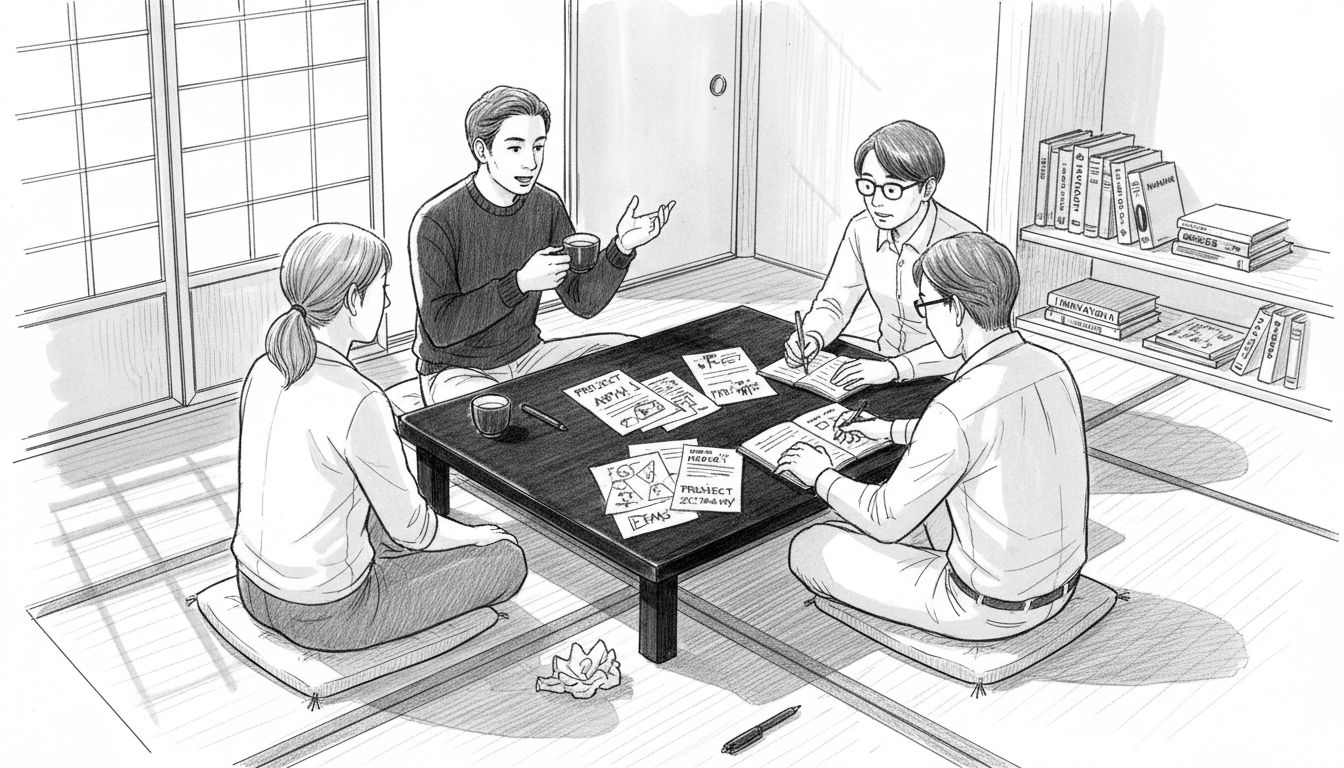
Understanding Ikigai requires moving beyond transactional views of life and embracing a more holistic perspective. It encourages individuals to find joy in small moments, cultivate meaningful relationships, and recognize that purpose is not a destination but a continuous journey of self-discovery and community engagement.
Here’s a summary of how Ikigai differs from typical Western concepts of purpose:
| Aspect | Ikigai Perspective | Typical Western Perspective |
|---|---|---|
| Approach to Purpose | Ongoing integration with daily life | Defined life/career goal |
| Success Measure | Fulfillment in community and self | Personal achievement |
| Role of Society | Central to meaning and purpose | Secondary to individual goals |
| View on Growth | Continuous and adaptive | Often goal- or milestone-driven |
Pro tip: Explore your personal Ikigai by reflecting on activities that simultaneously bring you joy, utilize your skills, and contribute positively to your community.
Exploring the Four Pillars of Ikigai
Ikigai is a multidimensional concept that harmonizes personal fulfillment through four interconnected pillars. Core components of life purpose represent a sophisticated framework for understanding individual potential and societal contribution.
The four essential pillars of Ikigai include:
- Passion: Activities that genuinely excite and inspire you
- Mission: Your broader purpose for positively impacting the world
- Profession: Skills and work that generate meaningful income
- Vocation: Intersection of your talents and societal needs
These pillars are not isolated elements but dynamic, interconnected dimensions that create a holistic approach to life satisfaction. When individuals align these components, they experience a profound sense of purpose that transcends traditional Western concepts of success.
Understanding the relationship between these pillars requires deep self-reflection. Each pillar represents a crucial aspect of personal development, encouraging individuals to explore their intrinsic motivations, external opportunities, and potential for meaningful contribution. The philosophy suggests that true fulfillment emerges when personal desires harmonize with broader societal needs.
Pro tip: Create a personal matrix mapping your passions, skills, potential income sources, and community needs to identify your unique Ikigai intersection.
Practical Applications in Daily Life
Ikigai transforms from an abstract concept to a tangible lifestyle approach through deliberate daily practices. Mental health and wellness strategies demonstrate how integrating Ikigai principles can profoundly impact personal well-being and life satisfaction.
Practical applications of Ikigai in everyday life encompass multiple dimensions:
- Mindful morning rituals that connect you with personal purpose
- Engaging in community activities that foster social connections
- Pursuing hobbies that align with personal passions
- Developing skills that contribute to personal and societal growth
- Creating intentional work-life balance
The philosophy encourages individuals to approach daily activities with intention and awareness. Whether through traditional Japanese practices like tea ceremonies, gardening, or modern adaptations such as purposeful career development, Ikigai provides a framework for meaningful living. Cultural practices promoting well-being offer insights into transforming routine experiences into opportunities for personal fulfillment.
Implementing Ikigai requires consistent self-reflection and intentional action. By regularly examining how daily activities align with personal values, passions, and societal contributions, individuals can create a more purposeful and satisfying life experience. The goal is not perfection, but continuous alignment and mindful engagement with one’s unique path.
Below is a quick reference for practical ways to apply Ikigai each day:
| Practice Area | Example Activity | Intended Benefit |
|---|---|---|
| Morning Routine | Mindful tea preparation | Grounding and intention setting |
| Community Engagement | Volunteer neighborhood cleanup | Foster social connectedness |
| Skill Development | Taking a new art class | Personal growth and joy |
| Work-Life Harmony | Designating tech-free evenings | Reduce stress, boost mindfulness |
Pro tip: Create a daily journal tracking activities that bring you joy, utilize your skills, and contribute to your community to gradually align your lifestyle with your Ikigai.
Balancing Passion, Skill, and Purpose
Ikigai demands a nuanced approach to integrating personal desires with practical realities. Four-circle model of life purpose.pdf) provides a sophisticated framework for understanding how individual aspirations intersect with broader life opportunities.
The critical components of this balance include:
- Identifying personal passions and intrinsic motivations
- Recognizing and developing unique skill sets
- Understanding societal needs and potential contributions
- Exploring financial sustainability and career alignment
- Creating meaningful connections between internal drives and external opportunities
Successful integration requires ongoing reflection and strategic skill development. Harmonizing personal and professional goals involves continuously aligning individual talents with meaningful work that generates both personal satisfaction and economic stability. This approach transcends traditional career planning by emphasizing holistic personal growth and societal contribution.
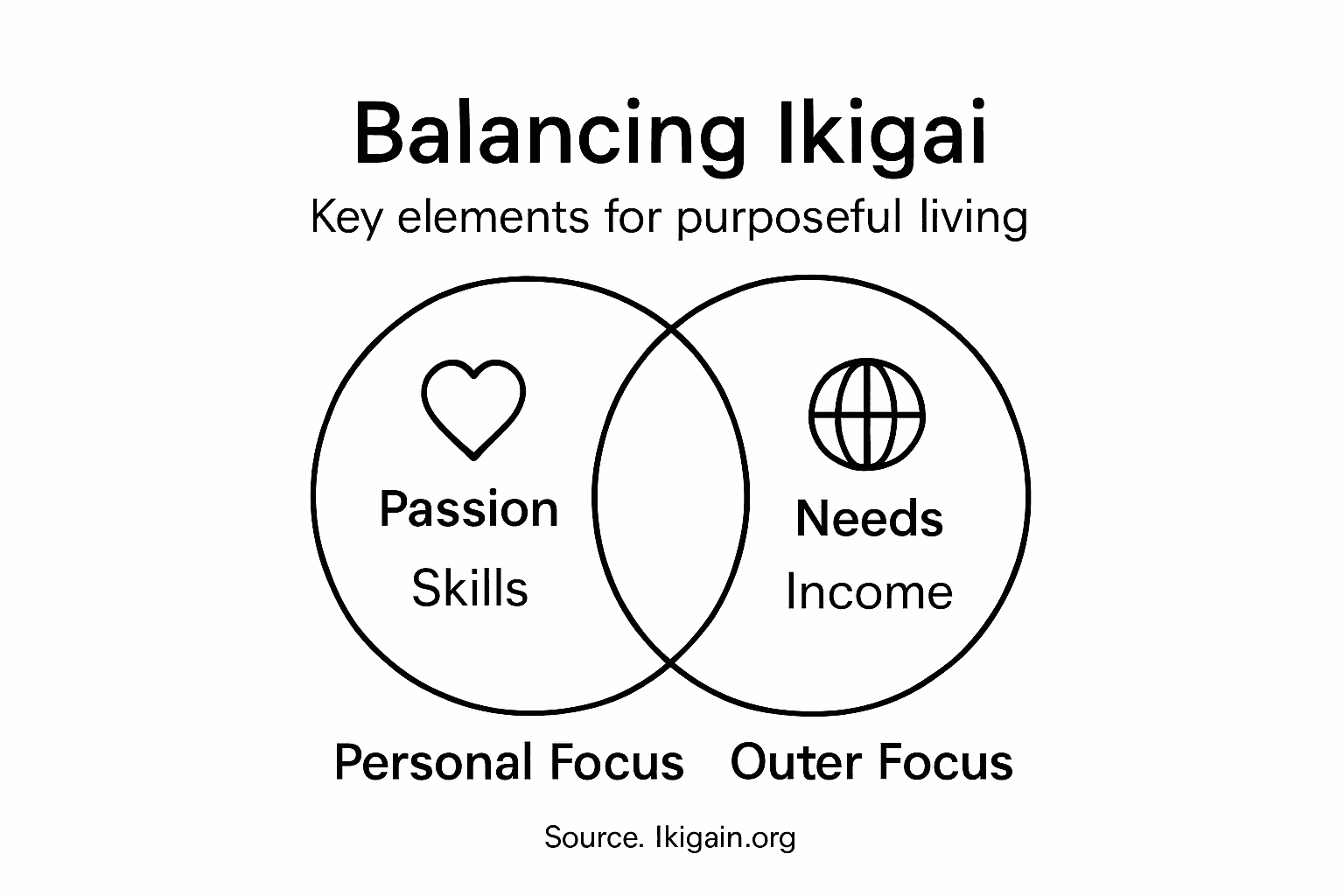
Navigating this balance is not about perfect alignment but about creating a dynamic, evolving relationship between personal capabilities and external opportunities. Young professionals must remain flexible, continuously learning and adapting their skills while staying true to their core values and passions.
Pro tip: Conduct a quarterly self-assessment mapping your skills, passions, societal needs, and potential income sources to maintain ongoing alignment with your Ikigai.
Common Mistakes and How to Avoid Them
Ikigai is often misunderstood, with many individuals falling into predictable traps that undermine its profound philosophical essence. Misconceptions about life purpose can significantly distort the true meaning of this transformative concept.
Common mistakes in pursuing Ikigai include:
- Treating it as a one-time goal instead of an ongoing journey
- Focusing exclusively on career success or financial outcomes
- Neglecting the importance of community and social connections
- Forcing rigid alignment of personal passions and professional demands
- Overlooking the significance of small, meaningful daily experiences
- Expecting immediate or perfect life transformation
Cultural nuances of personal fulfillment reveal that Ikigai is not about achieving a static state of happiness, but cultivating a dynamic, adaptable approach to life. Young professionals often mistakenly view Ikigai as a destination, when in reality, it represents a continuous process of self-discovery, growth, and meaningful engagement.
To truly embrace Ikigai, individuals must develop a flexible mindset that allows for continuous adaptation. This means accepting that personal purpose evolves, being open to unexpected opportunities, and maintaining a balance between personal aspirations and broader societal contributions. Patience, mindfulness, and a willingness to learn become crucial elements in navigating one’s unique Ikigai journey.
Pro tip: Create a reflective practice of monthly journaling to track your evolving understanding of purpose and remain open to unexpected insights about your Ikigai.
Discover Your Unique Path to Fulfillment with Ikigain.org
The article explores how Ikigai is more than a simple goal but a continuous journey that balances passion, skill, purpose, and community connection. Many readers struggle to clearly identify this harmony in their lives or feel overwhelmed trying to align their career goals with personal well-being. If you find yourself searching for that meaningful intersection between what excites you and what benefits others this challenge is something you can overcome with the right guidance. Ikigain.org understands these core principles of Ikigai and is dedicated to helping you uncover your personal purpose through a carefully designed personality test that highlights your passions and strengths.

Start your journey now by taking a personalized personality test that connects modern self-discovery techniques with traditional Japanese philosophy. This powerful tool offers insightful clarity so you can build a life filled with passion and contribution. Don’t wait to align your daily life with your Ikigai. Visit Ikigain.org and explore how you can transform these timeless principles into practical steps toward fulfillment today.
Frequently Asked Questions
What is the concept of Ikigai?
Ikigai is a Japanese philosophy that represents a holistic approach to understanding life’s meaning through personal fulfillment and community connection, focusing on joy, purpose, and individual significance.
How can I explore my personal Ikigai?
To explore your personal Ikigai, reflect on activities that bring you joy, utilize your skills, and contribute positively to your community. Mapping these elements can help identify your unique intersection.
What are the four pillars of Ikigai?
The four pillars of Ikigai are Passion (what you love), Mission (what the world needs), Profession (what you can be paid for), and Vocation (what you are skilled at). These pillars work together to create a fulfilling life.
How can I apply Ikigai principles in my daily life?
You can apply Ikigai principles by integrating mindful practices into your routine, engaging in community activities, pursuing hobbies that excite you, and maintaining a healthy work-life balance.